
To top
Worldwide shipping - All Taxes & Duties included

The pursuit of adventure: Bengt Rotmo and Randulf Valle skied through the Canadian wilderness

The pursuit of adventure: Bengt Rotmo and Randulf Valle skied through the Canadian wilderness
Share to

The end point of a trip isn’t always the real goal. In the winter of 2025, Bengt Rotmo and Randulf Valle spent five weeks skiing through the Canadian wilderness. They started in the forests around Great Slave Lake, set their course toward the tundra, and continued to Kugluktuk on the shores of the Northwest Passage. But even though this Inuit settlement marked the end of their journey, it was not the goal. We sat down with Randulf to understand how that makes sense. Because why isn’t the destination and the goal the same thing?

- We’ve always been motivated by the experience itself. The drive is to find our own adventure, navigate the wilderness, and spend time in large, unbroken natural areas, Randulf explains.

This philosophy also guided their choice of route. Exactly where they travelled wasn’t the most important thing - it just had to fit the five weeks they had available. With their eyes on Canada, they considered several options and tried to gather as much information as possible.

- The first part of our trip followed a built-up ice road that’s created every winter to reach the settlements in the area. That part was very straightforward, but after we left the road there was hardly any information to be found. Maybe it was exactly this lack of information about travelling here in winter that made us go precisely there, Randulf points out.
 

We immediately feel the need for a closer explanation.

-It’s a fact that the feeling of adventure is, to some degree, dependent on uncertainty. If you know everything about what to expect, and you’ve been given an exact route to follow, it will definitely influence the experience, Randulf explains, giving an example from Norway.

- Take Besseggen, for instance. It’s beautiful to get to the top and see the view over the narrow ridge dividing Bessvatnet and Gjende. But imagine arriving there without ever having heard of the place or seen photos taken by professional photographers in perfect conditions? That shock effect of discovering such a place would be something entirely different. Of course, such moments are rare. But the joy of stumbling upon a couple of square kilometers of gorgeous spruce forest when you thought you were still on tundra is much more intense when the trees appear as a surprise.
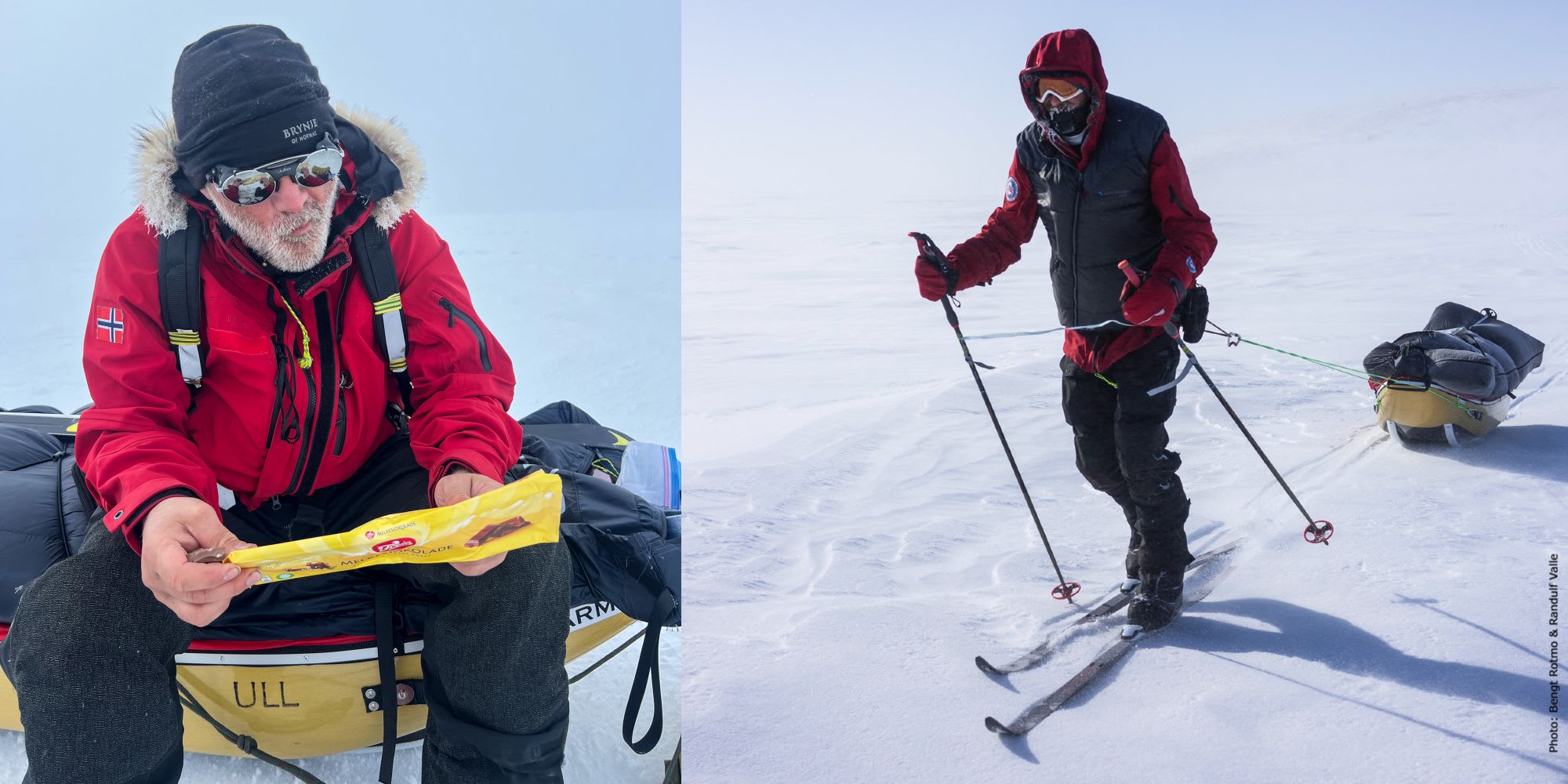
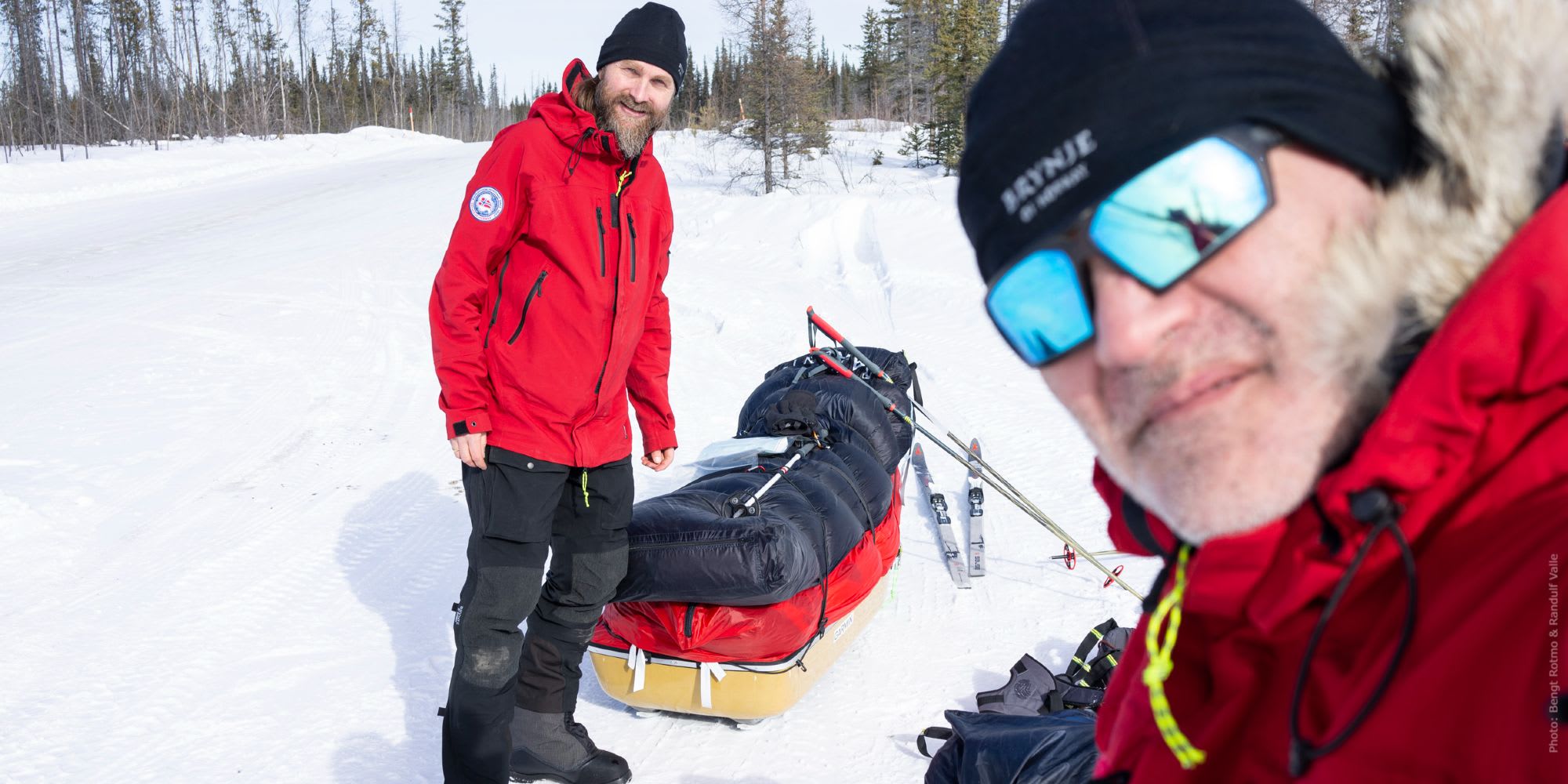
But how do you actually carry out a trip like this in practice? What about logistics? And is there a lot of bureaucracy you need to deal with beforehand, like on the Greenland ice sheet or in Antarctica?
 

- Canada is refreshingly non‑bureaucratic. It can be different in some national parks, but generally you can just head out. Logistics are also quite manageable. We flew to Yellowknife, which you can reach within a day from Norway. Food, fuel, and any last pieces of gear - you can buy it all there, and then you can basically just set off into the forest. Alternatively, you can take a domestic flight to one of the many small Indigenous communities in the north. Besides having an airstrip, they also have a co‑op store, which means they have everything you need to start or end a trip - or stop by to buy supplies and fuel.
 

But regarding equipment—do you need much that you wouldn’t need in the Norwegian mountains?

- The conditions in Norway and Canada are quite similar. The gear you use at home works in Canada too, with a few adjustments. Temperatures down to –40°C and below are more common, and your sleeping bag should reflect that. We chose to bring a firearm since there’s more wildlife over there. Bears can be out of hibernation as early as April.
 

We remind Randulf about his book “Hvorfor er det så kaldt å være våt?” (“Why Is It So Cold to Be Wet?”), written a few years ago. In this book, he explains the science behind things we experience outdoors. Is there anything from the book that’s particularly relevant for a trip like this?

- I’m not sure that’s the right angle, he says with a smile. The book is partly the result of experiences from the field that I wanted scientific explanations for. So in most cases, it was about understanding something we already felt through experience. But concretely - I mostly wore mesh base layers next to the skin, because I believe in the advantages and have found good scientific explanations for them. Another relevant thing is the tent we used. We helped develop it, and one of our key principles is that a tent for long winter expeditions should have a low ceiling height, because it gives better warmth and wind stability.


Anything else to consider when it comes to safety?

- You’re sometimes far from people, so bringing a more extensive set of medicines and first‑aid supplies than usual can be wise. For communication, we brought two Garmin InReach devices plus a satellite phone. But even then, it might take time before someone can reach you if the weather is bad and you’re hundreds of kilometers from anyone. Weather is another thing - you’re out for weeks, so you take the weather as it comes. You can’t check the forecast and avoid a storm. We used the forecast available through Garmin so we had an idea of what was coming. Another thing to check is whether your travel insurance actually covers this type of trip. There are differences between companies, and it’s important to have everything in place.
 

But if you don’t want to head out in complete ignorance—where can you find information?

- We connected with people who had posted photos on Google Earth from the most remote areas. On the ground in Canada, it’s smart to try to get in touch with people from the Canadian Rangers - a military force similar to the Norwegian Home Guard. In small communities, the Hunters and Trappers Association can also be a good starting point.


Randulf Valle and Bengt Rotmo used these Brynje garments in Canada:

Expedition Down Parka 2.0

A durable and reliable down jacket that provides warmth and good protection under extreme conditions.

10701274
From:
Expedition Jacket 2.0 M's

Robust cold-climate shell jacket for men designed for high mountain and expedition wear.

10951272
From:
Expedition Pants 2.0 M's

Robust technical hardshell pants for men designed for high mountain and expedition use.

10950402
From:
New
Polar Double Jacket

Supremely warm and comfortable jacket, suitable for a range of outdoor adventures and professional uses.

10601507
From:
Super Thermo Zip Polo

10201205
From:
Super Thermo Longs

10200412
From:
Classic Zip Polo Shirt

Behagelig, myk og kløfri ulltrøye i tettstrikket merinoull av fineste kvalitet.

10301200
From:
Classic Wool Longs

10300400
From:
Classic Boxer M's

Ultrasoft thermal wool boxer made in a blend of superfine merino wool and polyamide for optimal stretch and durability.

10300800
From:
Expedition Mittens 2.0

10953800
From:
Hiking Pants M's

All-around softshell hiking pants are lightweight, durable and very comfortable to wear.

10900400
From:
New
Classic Wool Light T-shirt, M's

Ultralight and versatile wool T-shirt with a comfortable fit.

10310200
From:

More inspiration:

Randulf Valle runs the podcast "Podcasten Uteliv". You’ll find lots of useful information there if you’re dreaming of a bigger adventure. Here are some episodes to start with:

Links
My account